“It’s time for some lifeguarding,” Dr. Ted Heyming says as he jumps away from his computer to check on patients in the Emergency Department.
“You look at everybody and make sure no one’s drowning,” he explains. “Then you go back and repeat. You’re continuously repeating — just like a lifeguard who continuously scans the water.”
As medical director of the ED at Rady Children’s Hospital Orange County, formerly called CHOC, Dr. Heyming works a shift six to eight times a month on top of his administrative duties.
A recent winter shift that began at 1:30 p.m. ended up stretching past his scheduled finish time of 10 p.m. – just before a trauma call came in.
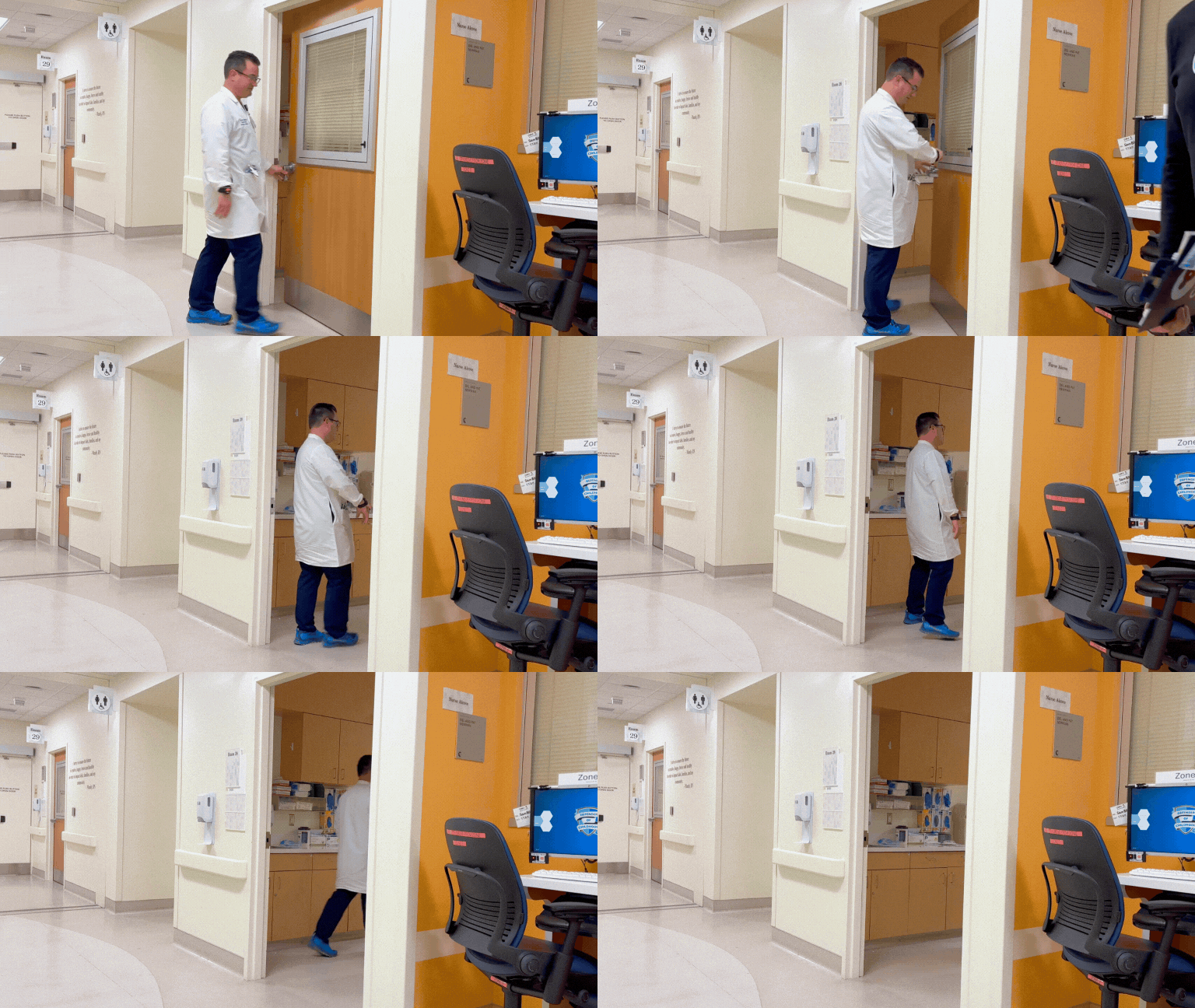
Dr. Heyming’s job requires confidence, experience, and the breadth of knowledge that is necessary for him to make quick medical decisions based, more often than not, on limited information.
He’s in near-constant motion from his computer to patient rooms tasked with a critical balancing act: Does a patient need to be admitted to a hospital room or is he or she stable enough to be sent home? Also, what medications and tests are needed?
Dr. Heyming’s job also requires stamina, a mastery of multi-tasking, and the ability to remain cool-headed in the unpredictable and often emotionally charged environment of a pediatric emergency room.
And it requires a large team to get the job done.
Endurance test
A shift in the ED is an endurance test. Dr. Heyming maintains a regimen of swimming, climbing stairs, and rucking – walking or hiking with a weighted backpack – to remain up to the task.
And, in addition to the physical toll, behind every door is a patient relying on him being the best version of himself. But, he says, staying motivated is never a problem.
“Sure,” Dr. Heyming says, “my motivation can be lowered based on negative and emotionally difficult situations and interactions. But it’s possible that the next interaction will be the one to make me smile and feel good again; such interactions get me back out there. And when everything is going right — one of those ‘good days’ — I can feel like I’m on top of the world.”
Or not.
A few years ago, Dr. Heyming cared for a toddler who was crashing due to widespread clotting and bleeding triggered by sepsis.
“With his last lucid moments,” Dr. Heyming recalls, “he asked his father, ‘Dad, can you take care of the dogs?’
“He didn’t make it. His pure innocence, caring for his animals while he was about to pass away, always reminds me of why I’m in pediatrics. Because there’s no better calling than striving to protect the innocent.”
Shift handoff
Running shoes laced up, a drawer marked “Hydration” at his feet as he scans a computer screen to learn about the status of patients and their reasons for being admitted, Dr. Heyming’s shift begins with rounding.
Stationed in the North Zone – one of two areas in the ED – he goes room to room with Dr. Jasmine England, whose shift began at 5:30 a.m. and who brings him up to speed on each patient.
Before he reported to work, Dr. Heyming had a spicy tuna roll – a good thing, since he ended up not having time for a meal, let alone a snack, for more than eight hours.
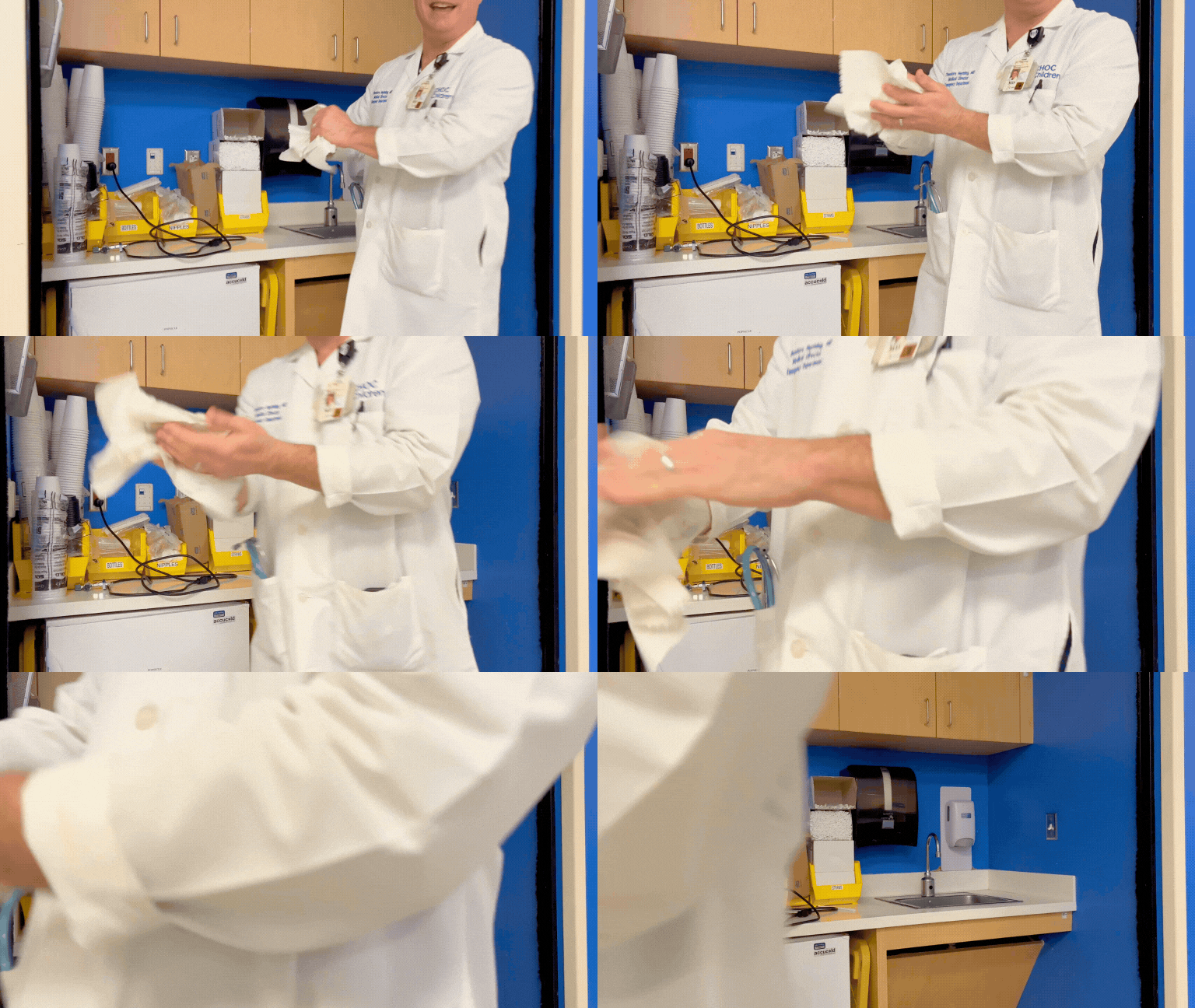
Outside of each patient room, he washes his hands and punches a dispenser of sanitizer to slather the foam over his hands before slapping on a pair of purple latex gloves and greeting patients and their families.
“Hi, I’m Dr. Heyming,” he says as he enters one room. “Nice to meet you.”
Fluent in medical Spanish, he remains cordial as he works swiftly. He has a small green flashlight in the shape of a rocket he gives to small patients to play with.
“What happened, mama?” he asks the patient’s mother.
Her toddler son tripped on a toy and fell straight back, his head hitting the floor, she tells him. He momentarily lost consciousness and she was concerned he had a seizure.
“Sometimes kids pass out when they experience sudden pain,” Dr. Heyming tells her.
He presses down firmly on the toddler’s skull.
The boy doesn’t cry.
“He doesn’t have a fracture. Otherwise, he would have cried out in pain.”
Convinced the boy didn’t suffer a fracture, Dr. Heyming rules out the need for a CT scan using an evidence-based rule and urges the mother to receive training in CPR – something he routinely recommends to all parents and caregivers.
In another patient’s room, he plays peek-a-boo with a curtain.
A 6-year-old girl in another room is holding a plush Dalmatian, complaining of abdominal pain and headaches. A fireman gave her the toy to help calm her.
“What grade are you in?” Dr. Heyming asks her.
“Kindergarten.”
“Do you like it?”
She nods yes.
“You’re so brave,” he tells her.
Sounds and teamwork
The ED has distinct ambient sounds:
The mechanical hum and clicks of a CT scanner.
The rapid, repetitive beep of a medical alarm indicating a critical patient status.
The sound of a heart monitor beeping steadily in a quiet patient room
There are murmured conversations, louder ones, the ringing of phones and the clackety clack of info being typed into computers.
Dr. Heyming seems to be oblivious to all these sounds – except for Code Critical and other alerts that require an all-hands-on-deck response.
With him as he maneuvers around the ED is a medical scribe whose job is to input in real time the latest information on each patient.
When the scribe’s computer temporarily went down, Dr. Heyming memorized most of the details of four patients he saw – scribbling some notes on a paper towel – for her to input later.
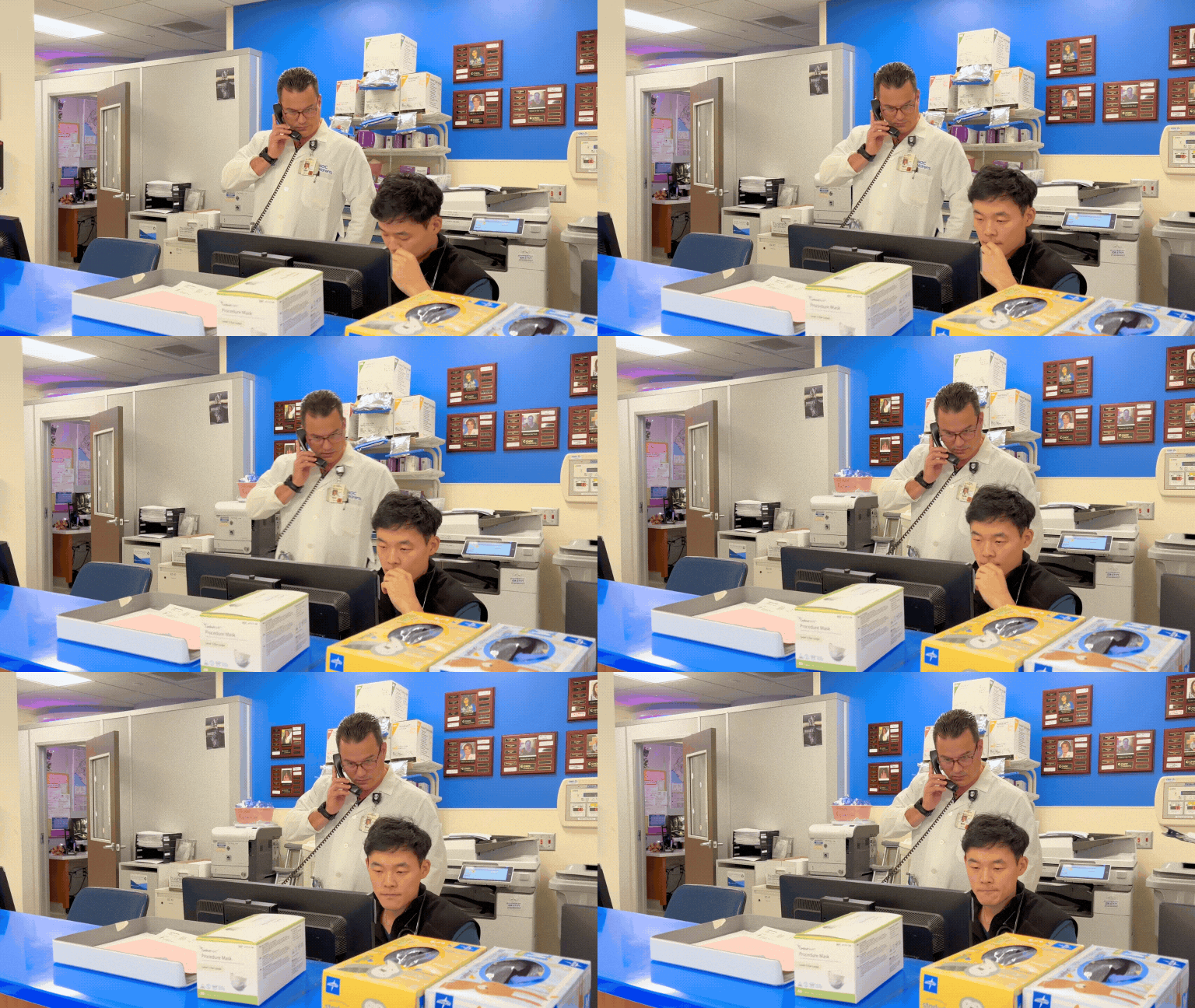
Several times, he spun his chair around to ask a monitor technician to call a specialist – for example, he needed to speak to a neurologist to check on a patient’s medication dosage. As part of a children’s hospital, ED physicians have immediate access to expertise in nearly any pediatric specialty they need.
In addition to performing clerical duties, ED med techs are responsible for monitoring patients’ heartbeats and EKGs on large screens that rim their workstation. On this shift, Lucia Redela contacts several specialists for Dr. Heyming to consult.
The ED is all about teamwork.
The nursing staff is the core team, shouldering most of the responsibility for creating a positive patient experience.
Charge nurses manage the very busy department. Working closely with nurses are the ED techs who perform crucial patient care tasks such as taking vital signs, drawing blood, and maintaining supplies to ensure smooth, efficient care for patients with urgent needs.
ED nurses have high-level expertise in critical care nursing, emergency procedures, and the ability to make quick decisions in high-pressure situations – just like Dr. Heyming.
Trauma Lead Clinicians (TLCs) are the nurses who oversee trauma patients. As their title implies, they – like all members of the ED – strive to provide a little TLC to all patients.
There’s a clinical pharmacist on staff 24/7 as an added layer of safety when it comes to prescriptions of medicine — something that is uncommon for a pediatric hospital.
Translators, Child Life and Patient Experience reps, and social workers also are part of the team.
So are MICNs, for Mobile Intensive Call Nurses. They staff the Base Station, where MICNs take calls from the field, coordinating with EMTs, paramedics, and other healthcare professionals to ensure seamless care continuity for patients being transferred to the ED.
Memories that stick
So many patients stick as memories and as reminders for Dr. Heyming.
“All ED physicians and providers have a story that would likely be the craziest thing you have ever heard,” he says. “From the purely random to the downright gruesome, we see human beings at their best and worst. These stick with me but do not engender the kind of happy emotions that the other categories of memories create.
“The happiest memories are the thank yous that I’ve received from patients. From a father who was an Italian restaurant owner who brought in food for the whole department after a visit, or the cancer patient who wrote a letter to me that was delivered after their passing, to the parents who remembered me from an ED visit several years before – these memories stick with me.
“In Emergency Medicine,” Dr. Heyming adds, “the thank yous are rare. We don’t expect them, so when received, they are cherished.”
Some numbers
Each year, the ED at Rady Children’s in Orange sees some 110,000 patients – an average of more than 300 a day.
This winter on some days, The ED has been hitting a daily patient census of 400.
That’s super busy.
The highest-ever census was close to 490, Dr. Heyming says.
Lately, the ED has been averaging 325 patients a day.
Ten new ED bays opening this fall will help.
But space, Dr. Heyming says, always seems to be at a premium.
He ducks into a room to check on a toddler with a respiratory virus.
He then sees two male teens who suffered moderate injuries in e-bike accidents.
He checks on a teen with inflammation of the optic nerve.
A urine test comes out negative for a young girl with strep throat.
Dr. Heyming orders an echocardiogram for a 2-year-old with Kawasaki disease to make sure her coronary vessels are not inflamed.
Starting the process
The ED patients keep coming – as they always do.
By the end of Dr. Heyming’s shift, he saw a total of 40 patients – assisted, at first, by a resident and then a physician assistant.
After a shift in the ED he avoids eating a lot of food and watches TV for an hour or two — something not too taxing.
“I try not to stay up too late,” he says.
Dr. Heyming is due in the office the following morning for admin work.
“I have a 13-hour day tomorrow,” he says. “I hope to be in bed by midnight.”
The trauma patient arrives just after Dr. Heyming leaves. As the only Level 1 pediatric trauma center in Orange County, the ED is ready with more than a dozen staff members to treat the patient right away.
Dr. Divya Mirchandani relieves Dr. Heyming. She and trauma attending Dr. Amy Lawrence join the care team working on the patient.
Like most of his trauma patients, Dr. Heyming won’t know about their outcome unless he asks a colleague later.
That’s part of the job. Dr. Heyming has to be OK with not knowing and relying on his trust in colleagues throughout the hospital that the patients who are admitted out of the ED are receiving the best care possible.
He can’t get too emotionally invested in the patients he sees. Instead, he focuses on serving as one of the critical first links in the emergency healthcare chain.
“I love seeing happy parents and helping kids in distress who are afraid and uncomfortable,” Dr. Heyming says. “I can give them a sense of peace. I can help start that healing process.”
Learn more about emergency and trauma services at CHOC