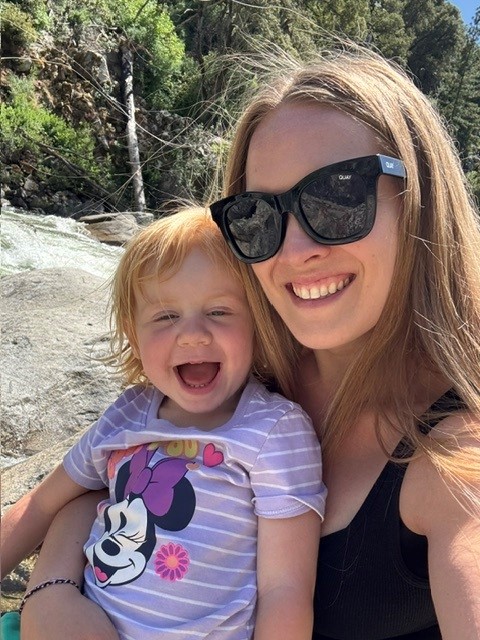
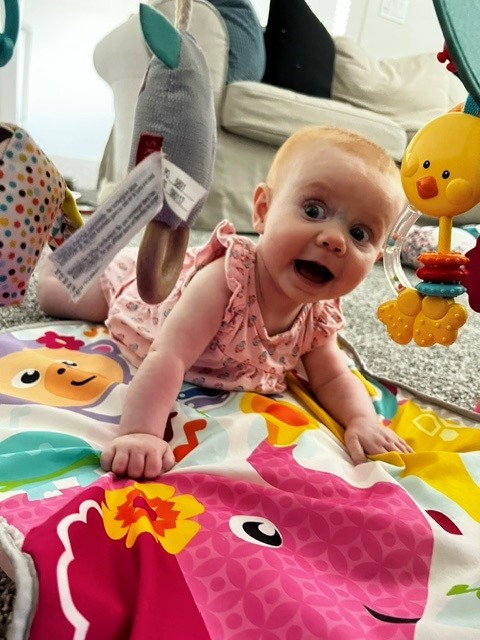
Taylor’s recent birthday party included a bounce house.
The 3-year-old also loves dinosaurs, riding her scooter, painting, swimming, and – of course — trampolines.
“She’s fearless,” says her father, Ryan.
“She’s wild,” says her mother, Kelly, adding: “You would have no idea she went through something like this.”
This refers to a scary medical journey that began at 2 months of age when Taylor began having cold symptoms.
What she ended up being diagnosed with was incomparably worse: a congenital heart defect typically detected in utero that required an innovative surgical approach by cardiovascular specialists at Rady Children’s Hospital Orange County, formerly called CHOC.
Launched in 2023, the cardiovascular program is transforming the way pediatric cardiac care is being delivered in Southern California.
Taylor is the latest beneficiary of the team led by globally renowned cardiothoracic surgeon Dr. Glen Van Arsdell.
Two surgical options
For more than a decade, Dr. Van Arsdell has contributed pioneering research involving the benefits of using cardiac MRIs to assess patients with “borderline” left ventricles (BLV), which Taylor was born with.
That’s a situation in which the left ventricle of the heart is underdeveloped, but still big enough where there is no clear consensus on which of two surgical options to pursue: a biventricular, or a two-ventricle, repair, the more desirable choice; or single-ventricle repair, which is more complex and eventually leads to more complications and likely heart transplantation.
Information obtained from cardiac MRIs helps surgeons decide which surgical approach to take, because this imaging technology provides an optimal way to measure ventricle size and function, amount of blood flow, blood vessel size, and scar tissue in the heart muscle, explains Rady Children’s pediatric cardiologist Dr. Pierangelo Renella, who sub-specializes in advanced cardiovascular imaging and was part of Taylor’s care team.
Rare heart defect
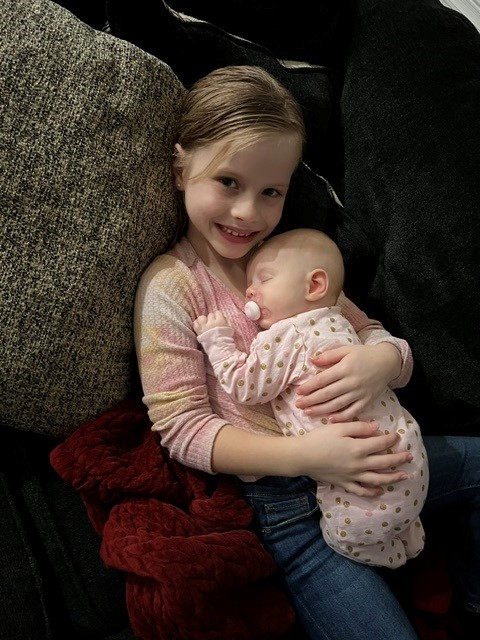
“BLV” is not an official diagnosis and usually occurs along with various types of serious congenital heart disease.
After being referred to Rady Children’s when she fell ill at 2 months old, and with her “cold” morphing into abnormal breathing and a loss of appetite, Taylor was diagnosed with Shone’s complex variant with coarctation of the aorta.
Shone Complex Variant is a rare congenital heart defect characterized by multiple left-sided obstructive lesions that affect blood flow in the heart. Coarctation of the aorta is narrowing of the aorta that can restrict blood flow to the lower body.
Coarctation requires surgery. The unique problem Taylor faced was that repairing her aortic arch straight away could have been dangerous because of her underdeveloped left ventricle.
“We needed to find out if the left side of her heart was of adequate size to be able to pump enough blood after the surgery to fix her aortic arch,” Dr. Renella explains.
An innovative approach
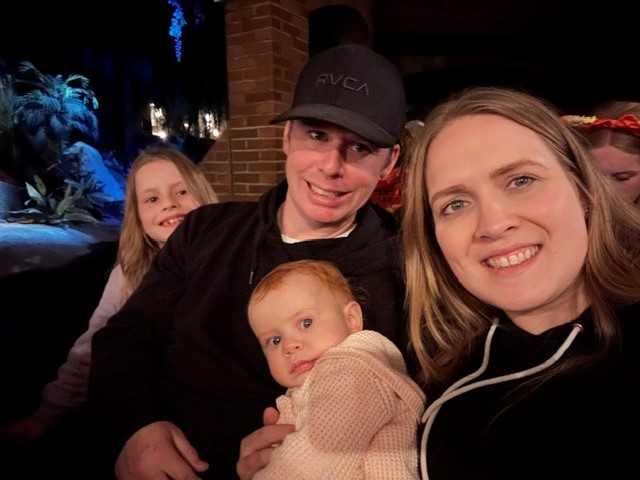
A cardiac MRI suggested the left side of her heart was too small for the standard coarctation surgery.
So, Dr. Van Ardell devised an innovative, two-stage surgical approach.
First, Taylor underwent partial surgery to have her aortic arch repaired. During this procedure, Dr. Van Arsdell added a shunt and two pulmonary artery bands to allow her left ventricle to grow.
Five months later, he completed the full repair of her heart after tests showed that Taylor’s left ventricle had tripled in size to a normal size for someone her age.
Now, some 2 ½ years later, the size of all the left side of Taylor’s heart structures have normalized, and no other surgeries are anticipated – a successful biventricular repair. She comes in to see Dr. Renella every 6 months and has done very well.
“She’s doing great and is almost off all medications,” Dr. Renella says.
Taylor is part of an international study led by the PSF Cardiology Division and Heart Institute at Rady Children’s with Dr. Renella as the principal investigator, to further study how cardiac MRI can help surgeons better choose between the more desirable of two surgical options for patients born with congenital heart diseases involving “borderline” left ventricles.
“We now have approximately 15 sites in the U.S. and around the world interested in participating in the study, with an anticipated patient enrollment of 200,” Dr. Renella says. If successful, this would be the largest such study in patients with congenital heart conditions involving “borderline” left ventricles.
No false hope
Ryan and Kelly, an ICU nurse at an adult hospital, were shocked at her diagnosis. Taylor has an older sister, Hailey, 10, who is healthy.
“The real challenging part was not really knowing how things would turn out,” says Kelly. “A lot of things were up in the air. There was a lot of uncertainty.”
Between her two heart surgeries, Taylor suffered a bowel perforation that required surgery to ensure she wouldn’t develop sepsis, a potentially life-threatening infection.
Kelly’s nursing skills came in handy.
Between her daughter’s two surgeries, she documented Taylor’s vitals every day and sometimes multiple times per day.
Kelly and Ryan praised the skill and care of both Dr. Van Arsdell and Dr. Renella.
“Dr. Renella was always reachable and provided us with his cell number,” Kelly says. “He would come and check on Taylor any time he had a free moment. He went above and beyond any expectation I had from a doctor.
“And I loved the way Dr. Van Arsdell was so calm and reassuring throughout the process. I’m eternally grateful for what he did for Taylor and her quality of life.”
He and Dr. Renella also were clear about Taylor’s condition, and they didn’t give Taylor’s parents false hope – something they appreciated.
“They could have given us all the hope in the world, and I knew what we were really dealing with, and it was terrifying,” Kelly says.
Now, all is joy and gratitude as they continue to watch Taylor grow.
Says Ryan: “She’s our special miracle.”
CHOC and UCLA Health together have been ranked among the top children’s hospitals in the nation for Cardiology & Heart Surgery by U.S. News & World Report.