Since its launch in 2024, the Pediatric and Lifespan Data Science Conference has been guided by a clear purpose. It is a platform designed to advance both research in artificial intelligence and its real-world application to improve care for patients across the lifespan, starting in childhood.
“This conference advances both research in AI and its real-world application, with a clear focus on improving outcomes for patients, families, and communities,” said Louis Ehwerhemuepha, PhD.
The conference is led by the Research Computational and Data Science team at the Research Institute of Rady Children’s Health in Orange County. Under the leadership of Dr. Terence Sanger, Phuong Dao, JD, and Dr. Ehwerhemuepha, it was created to address an important gap. While many AI conferences exist, few focus specifically on pediatric care, developmental biology, and the long-term impact of childhood conditions across the lifespan.
Children are not simply small adults.
“Pediatric care challenges us to think differently about data, because patients are constantly changing and evolving. If we want AI to truly support clinical care, it must reflect that complexity across time and development,” said Dr. Sanger, chief scientific officer at Rady Children’s Health in Orange.
From the beginning, the conference has defined success not only by the exchange of ideas, but also by relationships formed, partnerships sustained, and measurable improvements in patient care and community health.
“What makes this conference valuable is its focus on translation. It brings together the people building these tools and the clinicians who will use them, which is exactly what is needed to move from promising ideas to meaningful improvements in patient care,” said pediatric critical care specialist Dr. Robert Kelly.
Now in its third year, the conference, held on April 29 and 30, 2026, at the Hyatt Regency Irvine, reflects both consistency and momentum. What began as a focused effort has grown into a connected community that is steadily turning ideas into action.
Advancing AI Research
The conference opened with a reaffirmation of purpose and direction. Pediatric AI requires methods that account for time, development, and smaller datasets. Dr. Sanger emphasized that standard approaches are often not sufficient for these challenges.
Dr. Ehwerhemuepha highlighted progress made since the previous year, including new collaborations across institutions and countries. This progress includes advances in algorithms and their application, as well as improvements in how social drivers of health are measured and understood.
The keynote speakers expanded on this foundation and brought forward a range of perspectives that defined the scientific direction of the field.
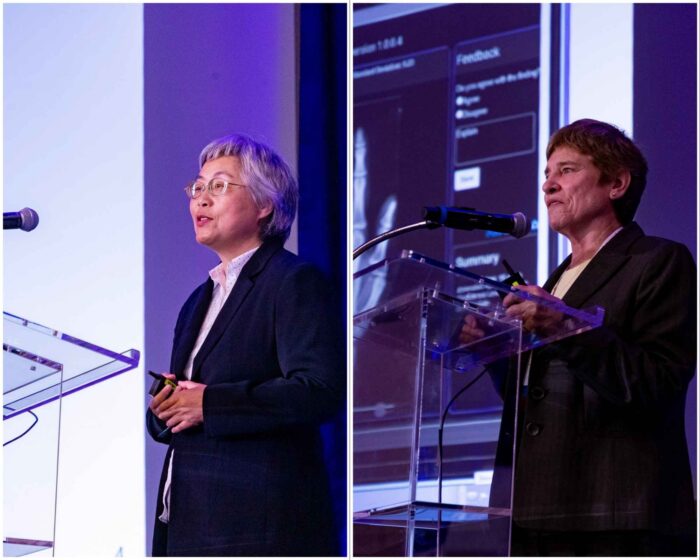
Dr. Annie Qu from the University of California, Santa Barbara demonstrated how smaller and diverse datasets can be combined to improve accuracy and reliability. Her work offers a path forward for pediatric research, where large datasets are often not available and rare conditions are common.
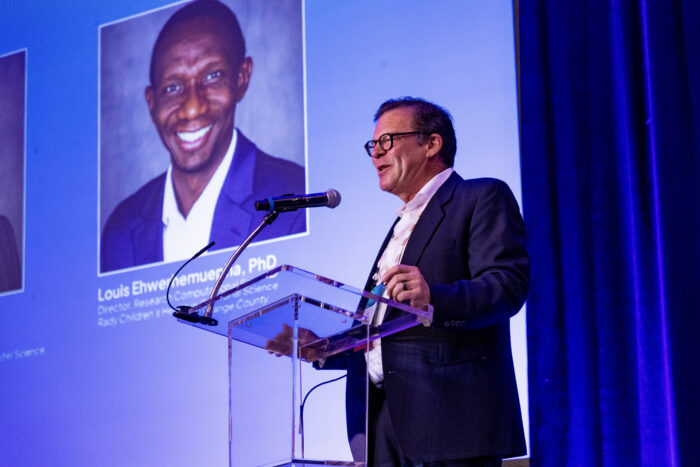
Dr. Katherine Andriole from UCLA focused on implementation, showing how AI tools, particularly in radiology, can move from development into clinical use. Her work emphasized the importance of infrastructure, governance, and thoughtful integration.
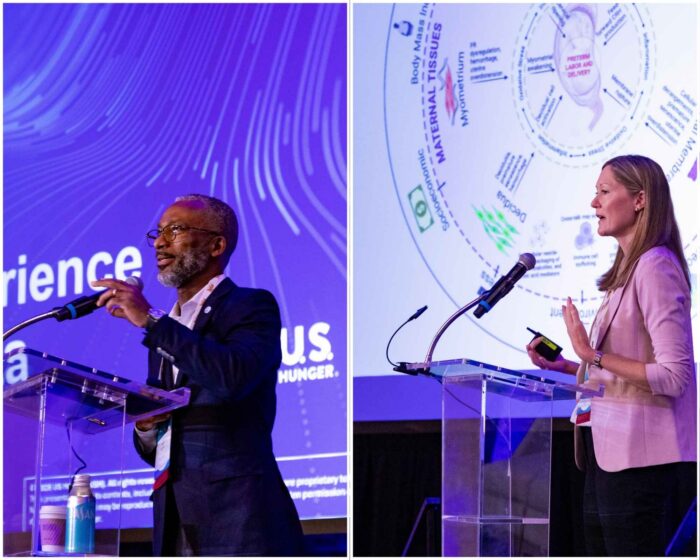
Rick Whitted from US Hunger broadened the discussion by focusing on social needs. He demonstrated how lived experience can be translated into structured data and showed that social risk can shift over time. His work also challenged common assumptions, highlighting that working-age adults often carry a significant household burden.
Dr. Kara Goss from UT Southwestern brought a lifespan perspective by examining the long-term outcomes of premature birth. Her work showed how early-life conditions shape health into adulthood and highlighted new opportunities for AI to improve prediction and care across time.
“Data science in pediatric and lifespan care isn’t about a single snapshot in time — it’s about understanding how early-life conditions shape health trajectories across decades,” says Dr. Steve Martel, vice president, chief health information officer, Rady Children’s Health in Orange County. “When we apply AI and advanced analytics to pediatric populations, we gain the ability to predict, prevent, and improve outcomes not just for children today, but for the adults they will become. The power of longitudinal data science lies in its capacity to connect the dots from childhood interventions to lifelong health, transforming how we deliver care across the entire continuum of life.”
Turning ideas into practice
Building on the strength of national and international expertise in AI and medicine, the conference emphasized both the promise and the challenges of applying AI in real-world settings.
Panels and presentations explored how AI is already shaping clinical care and how it can be implemented responsibly. A central theme was agentic AI, or systems that support decision-making and reduce the burden on clinicians. “In pediatric intensive care, every decision carries immediate and long-term consequences. Conferences like this help ensure that AI is developed not in isolation, but in direct response to the realities clinicians face at the bedside,” said Dr. Kelly. Speakers discussed how these tools can improve workflows and reduce burnout, while stressing that strong governance and oversight are essential. The goal is not to replace clinicians, but to support and extend their capabilities.
Several real-world examples demonstrated this shift from concept to application. A collaboration led in part by Rady Children’s Health, in partnership with Imperial College, is developing a reinforcement learning system to guide treatment decisions for sepsis, with potential application to other high-risk conditions.
Within the health system, tools such as RCH Chat are being developed to provide secure, well-governed access to AI for clinical and operational use.
These efforts reflect a broader pattern. Ideas introduced at earlier conferences are now being developed into practical tools and systems that directly support patient care. At the same time, existing solutions with real-world impact are being shared to expand their reach across health systems and organizations.
Building a community of innovation
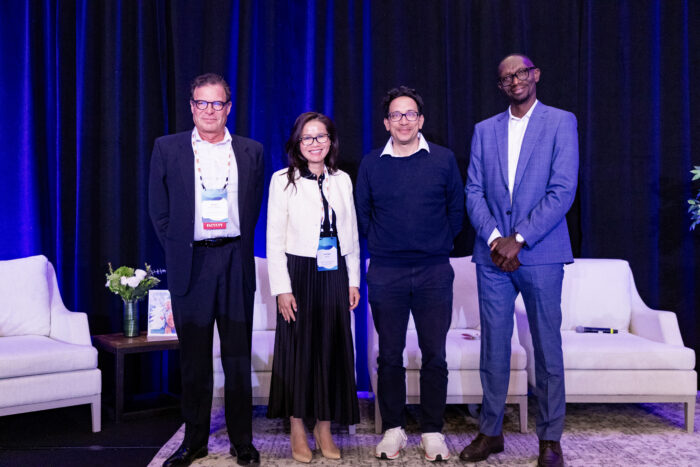
The abstract podium and poster sessions were a central component of the conference, bringing together researchers from local institutions and across the country to showcase both emerging and established work in pediatric and lifespan data science. The program featured a strong response, with 32 submissions spanning a range of innovative topics.
Three abstracts were selected for podium presentations, highlighting leading contributions from Jeremy Wayland, MS (Pasteur: A Framework for Evaluating Robustness of Clinical ML Models); Sean Dornbush, DO, MBA (Differences in Outcomes at Pediatric vs. Adult Hospitals for 18–26-year-olds with Complex Chronic Conditions); and Natanael Alpay, MS (Integrating Machine Learning for VAERS Vaccine Safety Signal Triage vs. Classical Disproportionality: A Pediatric and Lifespan Evaluation).
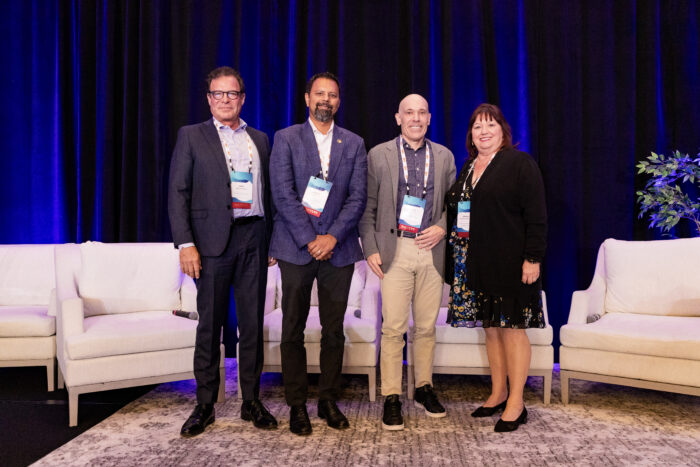
To elevate this year’s poster presentations, we introduced an expert judging panel. Three data science professionals provided in-person evaluations, ultimately selecting three outstanding posters for special recognition.
In parallel, a hackathon powered by AWS was organized by the Research Computational and Data Science team. Participants worked in teams to design and prototype AI solutions, supported by modern tools and expert guidance.
This year, participants were challenged to build a Care-to-Home Companion. The tool is designed to help families after hospital discharge by turning complex medical instructions into simple, easy-to-follow guidance. It also connects families to community resources such as food and housing support, recognizing that recovery extends beyond clinical care.
Importantly, this work continues beyond the conference. The team is advancing the solution toward a working product, with consideration of long-term deployment. This continuity reflects the conference’s role as an ongoing innovation pipeline.
Keeping people at the center
Despite its strong focus on technology, the conference remained grounded in human experience. Discussions around social needs emphasized that data must be understood within real-life context.
The patient and family panel brought this into clear focus. Families shared their experiences and described how AI could make care more accessible and less burdensome. They highlighted the value of tools that reduce repetitive communication, track health milestones, and provide guidance outside of normal clinical hours.
At the same time, they emphasized the importance of preserving human connection. These insights reinforced that empathy, clarity, and trust must guide the design and use of AI systems.
Real-world social impact and looking ahead
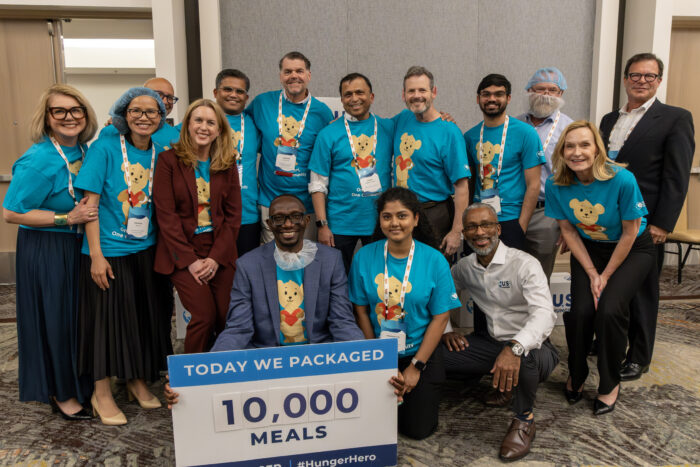
At the end of the first day, participants came together to pack 10,000 servings of red lentil jambalaya for distribution across the community and within clinics at Rady Children’s Health in Orange County . This social-needs effort was in collaboration with US Hunger, an organization committed to providing healthy meals to those in need and solving the root causes of food insecurity.
This effort was both simple and meaningful. It served as a symbolic and practical expression of the conference’s broader goal: real-world impact. It reflected a shared commitment to addressing social needs while reinforcing the importance of translating ideas into action.
The Pediatric and Lifespan Data Science Conference continues to grow both in scale and impact. It has become a place where ideas are tested, partnerships are formed, and real solutions are developed.
The work continues beyond the event. Collaborations expand, projects advance, and new tools are brought into practice. Rady Children’s Health in Orange County is helping to lead this effort by bringing together experts, clinicians, researchers, and families with a shared purpose.
The path forward is clear. The future of healthcare will depend not only on advances in technology, but also on how those advances are applied to improve real lives. This conference shows that meaningful progress is already underway and continuing to accelerate, both within Rady Children’s Health and across its growing network of collaborators in the United States and internationally.
Learn about pediatric research and clinical trials at CHOC