For children who have an ischemic stroke, the median time from symptom onset to diagnosis is around 24 hours. This full-day diagnostic delay can render them ineligible for time-sensitive interventions, such as intravenous thrombolysis (which must be administered within 4.5 hours) or endovascular thrombectomy (which must be performed within 24 hours). For the first time, the American Heart Association/American Stroke Association recommends such hyperacute interventions in select pediatric patients in the most recent guideline for early acute ischemic stroke management.
Common challenges and successful stroke care strategies
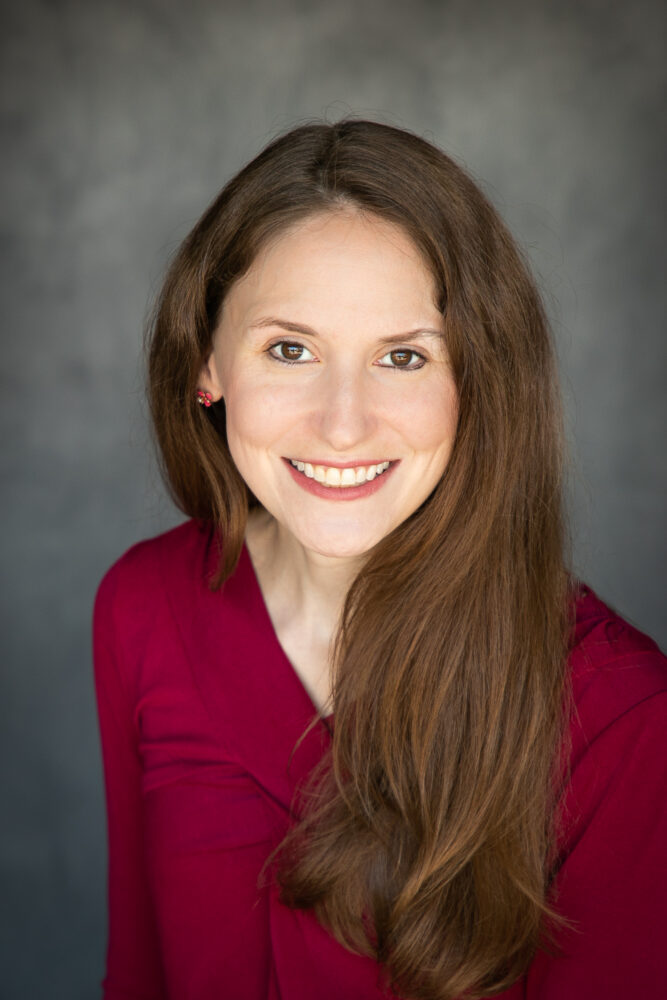
Dr. Rachel Pearson, director of brain injury medicine in pediatric neurology for CHOC Children’s Specialists, program director of the UC Irvine Child Neurology Residency Program, and assistant clinical professor of pediatrics and neurology at UC Irvine, is a key voice working to ensure children can receive those potentially lifesaving interventions expeditiously.
Dr. Pearson served as first author on a 2026 report in Stroke examining the obstacles to pediatric stroke readiness in the U.S. and how local and regional health systems seek to overcome them.
She will present her work at the 55th Child Neurology Society Annual Meeting in Montréal Oct. 14-17, 2026.
By highlighting five case studies from across the country, Dr. Pearson and her coauthors identified key factors helping local and regional health systems improve the timeliness of pediatric stroke care. These factors include:
- Removing silos and partnering across entities within the healthcare system that play a role in pediatric stroke care, to facilitate assessment and treatment
- Educating first responders, hospital providers and staff, the public, and others about pediatric stroke
- Implementing pediatric stroke-specific pathways for triaging, imaging, nursing and more, and, when appropriate, integrating these into existing adult stroke care pathways
- Engaging key stakeholders early to ensure recommendations were both clinically rigorous and operationally feasible
The case studies revealed several challenges to achieving Pediatric Stroke Readiness, including disparate resources and standards of care across health systems and a reluctance to invest in pediatric stroke programs, among others.
Teaming up for stroke triage insights
One of the case studies featured in the Stroke report is a project shared by Rady Children’s Health Orange County, the University of California, Irvine, School of Medicine, the departments of Neurology and Pediatrics at the University of California, San Francisco, and the OC Health Care Agency. These institutions partnered to understand and alleviate diagnostic delays. The project is called FAST KIDS OC, which stands for “Fast Assessment and Stroke Triage in Kids in Orange County.”
“Our first goal was to understand the current state of how children with stroke-like symptoms are presenting to the emergency department [ED],” Dr. Pearson says. “We wanted to understand what drives some patients to receive neuroimaging or not, how long it takes them to get imaging, and the type of imaging they get so we can develop interventions to improve the time to diagnosis.”
Significant time disparity between primary neuroimaging modalities
The researchers examined the records of more than 3,800 children ages 1–14 with acute neurological symptoms. The children presented to Rady Children’s Health Orange County, Orange Campus Hospital via emergency medical services (EMS) from January 2019 to June 2023. Of the 695 patients who underwent neuroimaging, 570 had only a CT scan, and 125 had both a CT and an MRI. The median time from EMS activation to imaging was 2.29 hours for CT and 26.8 hours for MRI.
Dr. Pearson attributes the longer time to MRI to a variety of factors common at children’s hospitals. These include a lengthier throughput for this test compared with CT and the potential need to sedate patients to enable them to tolerate an MRI. In addition, the study, which looked at both ischemic and hemorrhagic strokes, found a longer time to MRI for the latter, likely because they can be diagnosed with a CT alone. For hemorrhagic strokes, MRIs were typically performed after an acute intervention to understand what caused the stroke.
“For the patients who got an MRI, almost 25% had actionable and abnormal findings, meaning there was something unusual on the MRI that drove clinical care or informed the next steps in management,” Dr. Pearson says. “This is interesting and important because it tells us that having protocols for assessing acute neurological deficits and stroke-like symptoms is critical not only for the diagnosis of stroke, but also for the diagnosis of other pediatric neurological emergencies that require timely diagnosis and treatment to optimize patient outcomes, like hydrocephalus or central nervous system infections.”
The importance of prehospital providers’ impressions
The study, which appeared in Frontiers in Stroke, also found that every patient for whom EMS providers documented a primary impression of stroke received neuroimaging.
“That tells us the prehospital providers’ impressions and documentation impact what happens in the ED,” Dr. Pearson says. “Therefore, educating prehospital providers on pediatric stroke is an important target to improve times to diagnosis.”
What might account for the key role that EMS providers’ insights played in ED clinicians’ decision-making? Dr. Pearson says it could be because EMS providers encounter far more people with stroke-like symptoms, mainly adults, than most pediatric ED physicians. When a pediatric ED physician sees a patient with acute neurological deficits, stroke may be on the top of their list of likely diagnoses. When they see it documented upon a patient’s arrival, it automatically goes to the top of the list and prompts the appropriate work-up.
Turning study findings into education and policy
The study represents the first phase of the FAST KIDS OC project, which has already led to increased education for local first responders on pediatric stroke.
“For the second phase of the project, we worked with partners in the Orange County EMS system to develop educational videos and materials to increase awareness of pediatric stroke among prehospital providers,” Dr. Pearson says. “They received these materials over the past year as part of their mandated monthly training. We are also working with OCEMS leadership on a policy to identify children with symptoms of a possible stroke and ensure they’re taken to a pediatric tertiary care center that can offer expedited imaging, diagnosis and interventions.”
Once their education and policy initiatives have been in place for a few years, Dr. Pearson and her collaborators hope to repeat their study. Their goal: to determine whether those steps affected the time to diagnosis and rates of treatment with hyperacute interventions for children with stroke.
Why increasing awareness is crucial
Dr. Pearson’s message to clinicians and community members alike is simple: Stroke is not just an adult disease. Children have strokes, too, and when they do, they may be left with lifelong morbidity.
“We need to spread awareness of pediatric stroke not only among healthcare professionals but also among parents, teachers, coaches and others in the community,” Dr. Pearson says. “We want everyone to know how to recognize stroke-like symptoms in children and treat them as a neurological emergency to facilitate early diagnosis. That way, children can benefit from hyperacute interventions, just as adults do.”
Learn about the Neuroscience Institute at Rady Children’s Health Orange County, which features a multidisciplinary team to treat stroke patients in the hospital and a collaborative neurovascular clinic for ongoing care after discharge.