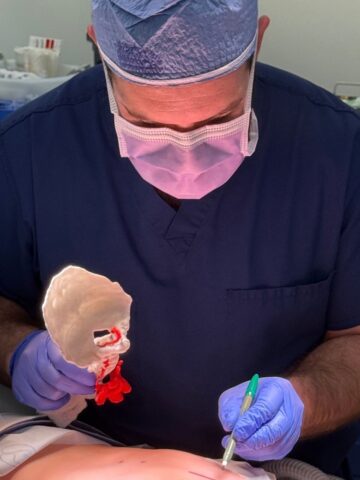
The American Academy of Otolaryngology-Head and Neck Surgery (AAO-HNSF) 2026 Annual Meeting & OTO EXPO will take place October 17-20, 2026, at the Los Angeles Convention Center in Los Angeles, California. Recognized as a premier educational and networking event, the meeting brings together leading experts, researchers, and clinicians from across the otolaryngology-head and neck surgery community.
Among the hundreds of distinguished specialists in attendance are Rady Children’s Health otolaryngologists, Dr. Kevin Huoh and Dr. Jay Bhatt, along with their team of clinical researchers.
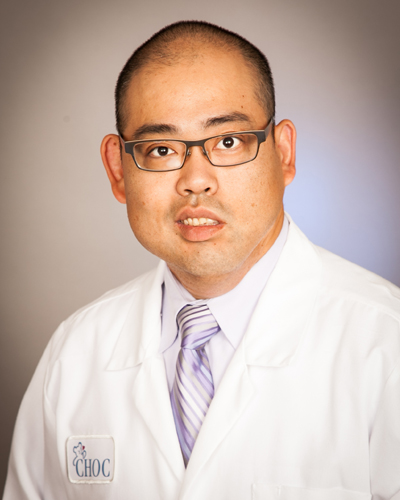

Clinical research team members:
- Dr. Joel S. Feier, MD
- Phuoc (Jenny) Vo, BS
- Rosa Montano, BA
- Yi An (Zoe) Hsiao, BS
Dr. Kevin Huoh, a pediatric otolaryngologist at Rady Children’s Health in Orange County who specializes in complex pediatric otolaryngology cases will present his research team’s data evaluating the operational and clinical efficiencies of intracapsular tonsillectomy compared to traditional extracapsular tonsillectomy.
Here is a preview of what they will discuss.
Operative time comparison between intracapsular and extracapsular tonsillectomy
Tonsillectomy is one of the most frequently performed surgical procedures in children. The leading reason for tonsil removal is airway obstruction. Over 90% of the tonsillectomy cases we see present with obstructive sleep-apnea or sleep-disordered breathing, says Dr. Kevin Huoh.
When tonsillectomy is indicated, there are two primary surgical approaches. In a traditional extracapsular tonsillectomy, the entire tonsil is removed. In an intracapsular tonsillectomy, most of the tonsil is removed while a thin layer of tissue is left in place to protect the underlying throat muscle.
Our Rady Children’s Health physicians and researchers looked at 694 tonsillectomies performed in children at our institution between 2013 and 2024, comparing actual surgical time and accounting for factors that could affect how long an operation takes.
“Intracapsular tonsillectomies have become increasingly popular over the years,” says Dr. Huoh. “However, one reason some surgeons have been reluctant to adopt the technique has been concern about residual tonsil tissue and whether the procedure might take longer to perform.”
In contrast to a traditional tonsillectomy, an intracapsular procedure involves much less surgical recovery pain, lower risk of bleeding after surgery, an earlier return to regular diet and fewer additional hospital visits.
Dr. Kevin Huoh and his colleagues’ findings suggest that this newer approach to tonsillectomy does not take longer to perform and may, in fact, save hospitals time and money while maintaining operating-room efficiency and offering recovery benefits.
“We are easily performing 20 to 30 tonsillectomies each week,” says Dr. Kevin Huoh. “With the data we have collected alongside our research team, we have the potential to positively impact countless patients by reducing post-operative pain and complications, while also sharing our expertise with organizations that have not yet fully adopted intracapsular tonsillectomy.”
Beyond advancing patient care, Dr. Huoh believes it is equally important to share these findings with the broader medical community.
“A lot of influence comes from us, and we want to teach others what we have learned,” he says. “We do not own this procedure, but we want to help the community improve outcomes and potentially enhance the quality of life for children everywhere.”
While the time saved during any single procedure may seem modest, those gains can add up significantly across hundreds of surgeries. As awareness of pediatric sleep apnea, sleep-disordered breathing and chronic snoring continues to grow, Dr. Huoh’s presentation will highlight the benefits of intracapsular tonsillectomy, when clinically appropriate, compared with traditional techniques.
Above all, Dr. Huoh wanted to recognize the critical role of the research team in making these findings possible. From data collection and analysis to coordinating the study, their efforts have been essential in every step of the way.
“We are the ones performing surgery, but our research team is doing everything else,” he says. “This work would not be possible without them.”
For more information on the conference, visit Annual Meeting & OTO EXPO – American Academy of Otolaryngology-Head and Neck Surgery (AAO-HNS).