Up to 25% of patients who have surgery for congenital heart disease experience neurological complications, potentially causing significant long-term challenges for development and quality of life.
Several modifiable and unmodifiable factors can contribute to postoperative neurological injury, according to congenital heart surgeon Dr. Joanne Starr, director of extracorporeal life support and surgical director of the cardiovascular intensive care unit in the Division of Cardiothoracic Surgery at Rady Children’s Health Orange County and associate clinical professor of surgery at the University of California, Irvine.
“Among the modifiable risk factors, the conduct of cardiopulmonary bypass during surgical correction of congenital heart defects may play an important role,” Dr. Starr says. “Although hypothermia has traditionally been used to provide organ protection, particularly for the brain, during bypass, deep hypothermia may be associated with adverse postoperative effects, particularly in neonates and young infants.”
According to Dr. Starr, congenital heart surgeons have not come to a consensus on an optimal temperature strategy for cardiopulmonary bypass during congenital heart surgery. Using a large, multicenter dataset, she and her colleagues conducted a first-of-its-kind study of the potential relationship between intraoperative temperature and early postoperative neurological outcomes in neonates who had cardiopulmonary bypass for congenital heart defect repair.

Temperature’s negligible influence on overall neurological outcomes
The team analyzed data on 24,345 operations performed between 2010 and 2019 in the Society of Thoracic Surgeons Congenital Heart Surgery Database. They categorized NIT into four groups: normothermia (higher than 34℃), mild hypothermia (28.1℃ to 34℃), moderate hypothermia (20.1℃ to 28℃) and deep hypothermia (lower than 20℃). The primary endpoint was major neurological injury, including stroke, seizure or persistent neurological deficit at discharge.
Nearly 5% of patients had at least one major neurological complication after surgery. Several factors were linked to a higher risk of postoperative neurological injury, including younger age at the time of surgery, younger gestational age, longer time on cardiopulmonary bypass, longer duration of circulatory arrest and the Norwood procedure. The use of cerebral perfusion was associated with a lower risk of injury. After risk adjustment, the team found no significant association between NIT and major neurological injury overall. Their findings were reported in the Journal of the American College of Cardiology.
Bolstering the case for a nuanced approach to NIT
In recent decades, congenital heart surgeons have trended toward using warmer intraoperative temperatures, in part due to improvements in technology and surgical techniques, according to Dr. Starr. That made one of the study’s key findings all the more intriguing. In patients who had the Norwood procedure, a complex surgery for hypoplastic left heart syndrome, an NIT higher than 26℃ was more likely to cause neurological injury compared with a temperature of 20℃.
Hypoplastic left heart syndrome affects around 1 in 3,846 babies born in the U.S. annually, according to the Centers for Disease Control and Prevention. Dr. Starr says the circulatory and physiological abnormalities seen with this defect make these patients especially vulnerable to neurological injury. As a result, identifying a potentially protective step congenital heart surgeons could take was encouraging.
“In the Norwood procedure subgroup in our study, lower operative temperatures were associated with a reduction in neurological injury, suggesting that a lower-temperature strategy during cardiopulmonary bypass may confer neuroprotective benefits,” she says. “These findings support the possibility that temperature management should be tailored to specific patient populations, and that lower temperatures may improve neurological outcomes in neonates undergoing the Norwood procedure.”
Enhancing care for congenital heart disease
Dr. Starr views investigating how NIT may affect postoperative neurological outcomes as part of a larger effort to improve the comprehensive care that children with congenital heart disease require. She points to numerous developments across the field that are furthering this goal, including:
- Advances in interventional cardiology that have expanded treatment options
- Greater collaboration between interventional cardiologists and congenital heart surgeons
- Research on how the prenatal and perinatal periods may affect neurodevelopmental outcomes
- Technological advances in anesthesia, cardiopulmonary bypass management and postoperative critical care
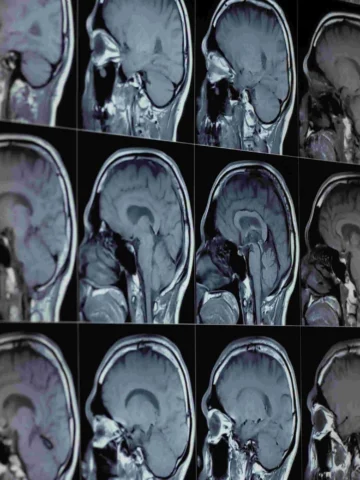
- The use of continuous electroencephalographic monitoring and advanced neuroimaging for early detection and tracking of neurological injury
At Rady Children’s Health Orange County, participation in the Society of Thoracic Surgeons Congenital Heart Surgery Database and membership in the Cardiac Neurodevelopmental Outcome Collaborative help the hospital deliver the latest, high-quality care. Collaboration between the hospital’s congenital heart surgeons and neurologists ensures patients younger than 3 months who have cardiopulmonary bypass receive routine postoperative neurological monitoring, such as cranial ultrasound, electroencephalography or CT, according to Dr. Starr.
“In addition, comprehensive long-term neurodevelopmental assessment and early intervention services have become integral components of standard care,” she says. “These multidisciplinary efforts have enhanced our ability to identify neurological injury at an earlier stage and provide timely interventions aimed at optimizing neurodevelopmental outcomes.”
Learn how the CHOC Heart Institute raises the bar for neonatal heart care, offering a cardiac NICU and the only neonatal and pediatric open-heart surgery and catheterization program in Orange County.