As measles vaccination rates decline in the U.S., the consequences are becoming more stark. In 2025, 2,289 confirmed measles cases occurred in the U.S., the most in nearly 35 years. By early August 2026, however, the number of confirmed cases had already surpassed the previous year’s total by more than 175, according to the Centers for Disease Control and Prevention. The U.S.’s measles elimination status is in jeopardy, less than a year after Canada lost its elimination status.
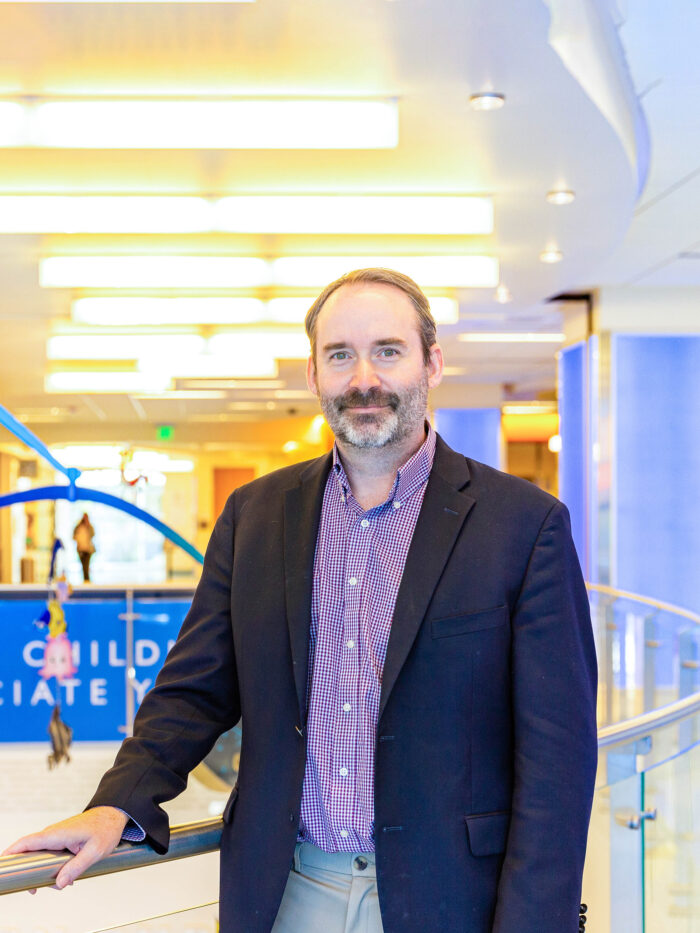
For pediatric neurologist Dr. John Crawford, division chief of child neurology at Rady Children’s Health Orange County Pediatric Subspecialty Faculty Inc., and UC Irvine, professor of clinical pediatrics and neurology at UC Irvine, and co-medical director of the Rady Children’s Health Orange County Neuroscience Institute, falling measles vaccination rates raise the specter of a rise in subacute sclerosing panencephalitis (SSPE).
A new, old threat
SSPE, which typically occurs years after measles infection, causes cognitive decline before progressing to myoclonus and coma. The condition is always fatal, usually within one to three years.
Dr. Crawford has treated two cases of SSPE in the U.S.: the first as a junior attending in San Diego nearly 15 years ago, and the second more recently at Rady Children’s Health Orange County.
“Death in a child is horrific, whether from trauma, cancer, a ruptured vascular malformation or infection,” Dr. Crawford says. “As a pediatric neurologist, I see those types of cases frequently, but I’ve never seen progression like with SSPE. It’s the worst of the worst.”
Virtually unknown in the U.S. for decades, SSPE may become more common in the future if non-vaccination trends hold steady or worsen. Dr. Crawford’s encounters with the condition, including the most recent, have him thinking about how to confront this looming challenge.
Investigating a suspicion
Both children with SSPE whom Dr. Crawford encountered had immigrated to the U.S. from countries where measles is endemic. The patient he treated at Rady Children’s Health Orange County, a 7-year-old boy, presented with a three-month history of seizures and cognitive decline.
“Based on that history alone, SSPE is not at the top of the differential diagnosis,” Dr. Crawford says. “We see a lot of patients with autoimmune encephalitis due to non-measles, probably viral triggers that are antibody-mediated disorders. However, the difference with this child was No. 1, the deterioration, and No. 2, his parents told us he’d had a febrile illness as a baby. He had been diagnosed with measles then, probably based only on clinical history.”
The patient’s cerebrospinal fluid analysis and serum titers were consistent with SSPE. So, too, were the electroencephalography findings. These included Radermecker complexes — intermittent slow waves often seen in patients with SSPE. What an MRI of the head showed, however, was more puzzling.
Uncommon imaging results
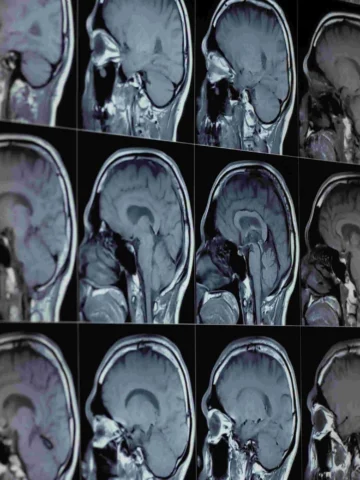
According to Dr. Crawford, the boy’s MRI features were more typical of autoimmune encephalitis, such as that seen in myelin oligodendrocyte glycoprotein antibody-associated disease (MOGAD), than of SSPE. In a write-up accompanying the images in The New England Journal of Medicine, published in February 2026, Dr. Crawford and co-author Dr. Michael Kung wrote that MRI imaging “showed edema and restricted diffusion in the frontal lobes that involved the cortical ribbon and white matter and extended into the corpus callosum.” MOGAD, Dr. Crawford says, can cause these sorts of cortically based abnormalities.
The patient’s MRI contrasted with the imaging findings in the first patient with SSPE Dr. Crawford treated more than a decade earlier, a teenage boy. That case was published in Case Reports in Neurological Medicine.
“The MRI pattern in the second patient was quite distinct from the patient I treated in San Diego,” Dr. Crawford says. “That first patient had more subtle, subcortical white matter volume loss.”
Sophisticated testing of the second patient enabled Dr. Crawford to rule out MOGAD and other autoimmune antibody-mediated disorders. Despite the unusual MRI findings, Dr. Crawford diagnosed SSPE based on the overall workup. The patient died a year after the onset of symptoms.
In search of more effective treatments
Lacking a cure for SSPE, clinicians typically attempt to slow its progression using antivirals, anti-seizure medications and other therapies, with limited effect. Novel treatments are needed, Dr. Crawford says, with current antibody-based therapies perhaps hinting at a way forward.
“We know there are certain inflammatory cytokines released during the process leading to SSPE,” Dr. Crawford says. “We’re a bit more sophisticated now in our ability to measure some of these inflammatory markers. As a result, we’re able to use antibody-based therapies to treat some autoimmune encephalitis conditions.”
The likelihood of a future increase in SSPE incidence due to declining measles vaccination should compel clinicians and policymakers to confront difficult questions, Dr. Crawford says.
“What are we going to do about it?” he says. “Just accept that SSPE means hospice for those who develop it, or move the needle and think ahead about what treatments we’re going to offer them?”
‘A responsibility to educate families’
For Dr. Crawford, being a physician also means being a teacher. He believes physicians have “a responsibility to educate families” about the importance of measles vaccination, especially to protect children who are too young to be vaccinated, older adults and immunocompromised people.
“The patient we published in The New England Journal of Medicine contracted measles at 7 months old,” Dr. Crawford says. “We don’t give the measles vaccine that early. So, an unvaccinated individual could give measles to a 7-month-old, which could potentially lead to SSPE. As clinicians, we shouldn’t shy away from difficult conversations about vaccination. It’s our job to educate.”
Learn how the Neuroscience Institute is at the forefront of pediatric neurology care, providing innovative therapies to patients across the full spectrum of neurological conditions.