Highlighting its ability to provide leading-edge treatments, Rady Children’s Hospital Orange County has enrolled the first three pediatric patients in the world in a clinical trial to treat Guillain-Barre Syndrome, a rare and serious autoimmune disorder.
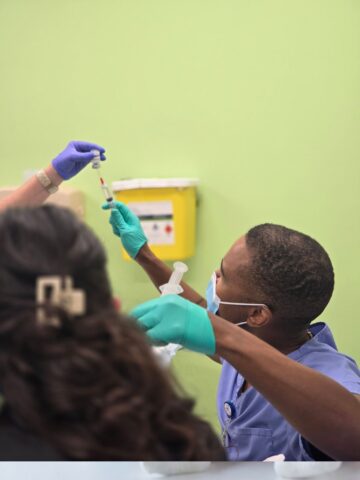
Collaborating with experts in Rady Children’s Research Institute and the IDS (Investigational Drug Services) Pharmacy, among others, pediatric neurologist Dr. Julian Thomas dosed the third patient, an exchange student from the Netherlands who had just started high school before she fell ill, in late August.
And like the other two patients who received this summer a single injection of tanruprubart, an investigational antibody that is the focus of a clinical study sponsored by Annexon Biosciences, a biotech company in Brisbane, Calif., the 16-year-old, Marith Hazeleger, showed signs of recovery after only one week.
“We are so grateful this clinical trial was available at Rady Children’s,” said Marith’s mother, Jantine, who cut short a vacation with her husband and two sons, ages 14 and 10, in the Canary Islands to fly to the U.S. for the first time after Marith was admitted to the Julia and George Argyros Emergency Department and, after her condition worsened in the inpatient Neuroscience Unit, was moved to the Pediatric Intensive Care Unit (PICU).
Finding an ‘off switch’
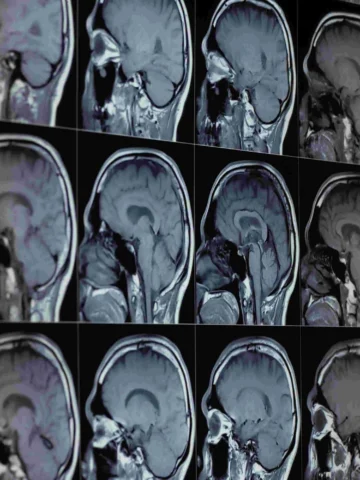
GBS is a condition in which the body’s immune system mistakenly attacks the peripheral nervous system, the network of nerves outside the brain and spinal cord. It first presents itself as a tingly, pins-and-needles sensation in the toes and feet, and often ascends upward to the arms, face, and torso. GBS can strike a person of any age. It is most common in adults over age 50 but it can also affect children.
GBS, whose origins are not yet fully understood, can rapidly progress to severe muscle weakness or total paralysis, affecting chest muscles and requiring artificial ventilation in about one-third of cases.
Recovery is variable, Dr. Thomas says.
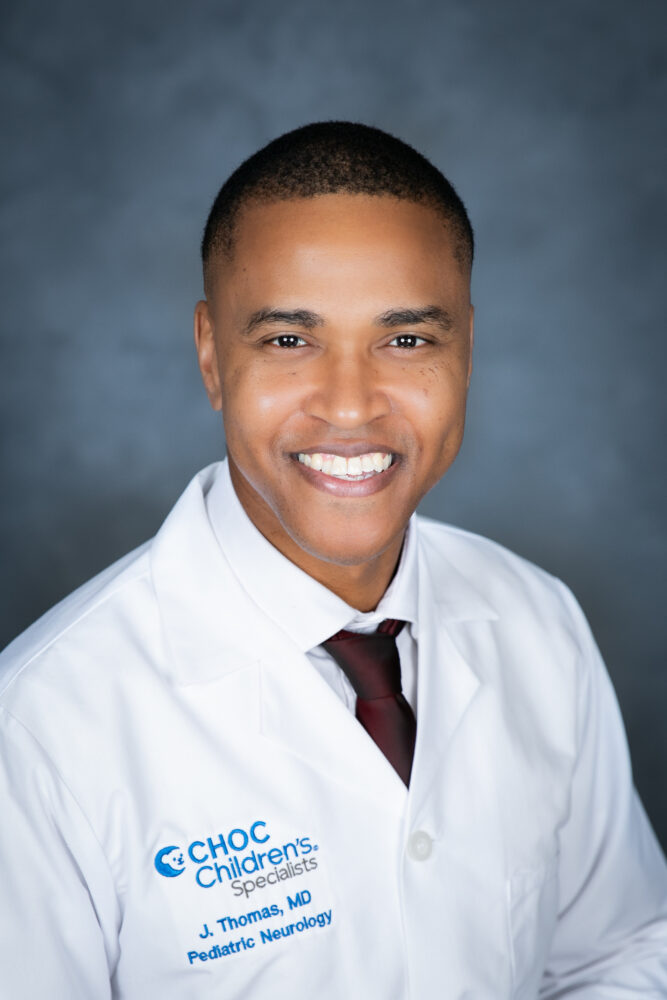
“Some people make a full recovery, most make some recovery, but it can get quite bad,” he explains. “Full recovery can sometimes take months to more than a year. Some people recover in a few weeks, but that’s rare.”
There are two commonly used first-line immunotherapies: intravenous immunoglobulin (IVIG) and therapeutic plasma exchange (TPE, or plasmapheresis). When started early, these treatments can shorten the duration of GBS, speed recovery, and improve long-term disability outcomes.
Annexon is evaluating an investigational therapy called tanruprubart in 30 GBS patients in the U.S. and Europe in an ongoing, multicenter, open-label, single-arm study. Rady Children’s is the first pediatric hospital to have enrolled patients.
Tanruprubart was designed to target C1q, the initiating molecule of the immune system, to block the damaging components of the classical complement pathway.
Vomiting, then severe weakness
Marith is from the small village of Kootwijkerbroek (population 6,220) in the state of Gelderland, located in the central-eastern part of the Netherlands.
After finishing high school in her home country, she came to Orange County to live with a host family and attend high school to figure out what she wanted to pursue academically or professionally.
Back home, she played korfball, a ball sport with similarities to netball, basketball, and ringball in which the objective is to throw a ball into a netless basket that is mounted on an 11.5-foot pole.
Since korfball isn’t a thing in the U.S., Marith chose cross-country running at Aliso Niguel High School. The heat and hills were tough.
Marith had only attended one day of classes when she got sick, vomiting at midnight.
She figured it was a stomach flu.
Then she had leg cramps.
She figured it was from running.
Over the course of three days, things worsened.
“My legs felt like spaghetti,” Marith recalls.
Her host mother kept Marith’s parents up to date on her condition. She took her to an urgent care clinic, whose doctor suggested she go to the ED.
Dr. Thomas diagnosed Marith with GBS when she was in the Neuroscience Unit. When her condition deteriorated to the point that she could not move out of her bed, Marith was sent to the PICU.
The road to recovery
Jantine flew to Southern California after consenting to have Marith enrolled in the tanruprubart clinical trial.
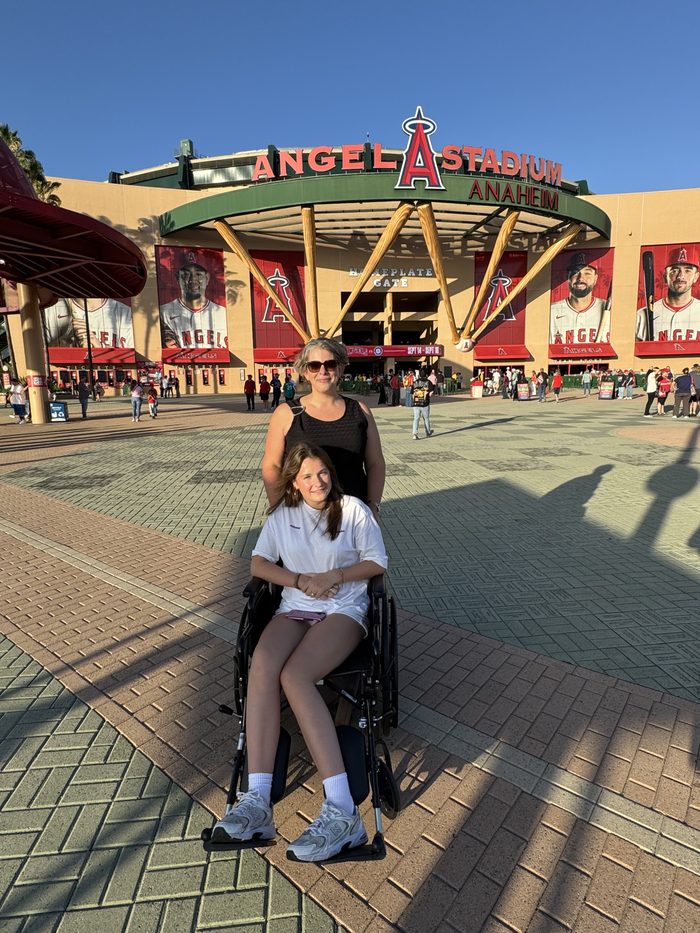
Within two days of receiving the infusion, Marith was moving her legs. In four days, she was walking around the PICU. She walked out of the hospital after a week.
“That was not to be expected,” says Dr. Thomas, who credits several people on Marith’s care team for making her stay at Rady Children’s as comfortable as possible. Amy Hoang and Paola Olvera-Morales, clinical research coordinators, and Shirley Chen, a supervisor in the IDS Pharmacy, went above and beyond, Dr. Thomas says.
Jantine calls Marith’s nurses “outstanding.”
“We are very grateful to be able to be a part of this clinical study and for the wonderful care we received from Rady Children’s,” Jantine says.
Back home
Marith and Jantine stayed in Orange County through mid-September so Dr. Thomas could monitor her and for Marith to undergo physical therapy.
These days, Marith can walk, but only for short distances. She is continuing PT in the Netherlands and Dr. Thomas continues to follow her progress via Zoom calls.
Marith had planned to be in Aliso Viejo for 10 months. Before she got sick, her host family took her to Disneyland, to San Diego for paddleboarding, and to Lake Havasu.
She’s grateful she’s feeling better but frustrated, naturally, with being unable to resume her active lifestyle. She’s hopeful, however, to continue her recovery over the coming months.
She’s not sure if she will return to Orange County as a study-abroad student.
“I’m glad I ended up here,” Marith says of Rady Children’s. “Staying in Orange County was hard because I didn’t have enough time to make friends here, and I missed my friends back home. The best choice for me was to go home and continue my recovery near my family and friends. I’m so thankful I have been able to feel better.”

CHOC Hospital was named one of the nation’s best children’s hospitals by U.S. News & World Report in its 2026-27 Best Children’s Hospitals rankings and ranked in the neurology/neurosurgery specialty.
Refer to a CHOC Pediatric Neurosurgery Specialist
Referrals can be placed online through the eCeptionist Referral Portal.